A New Era For American Soccer: The Dawn Of Promotion & Relegation In The USL
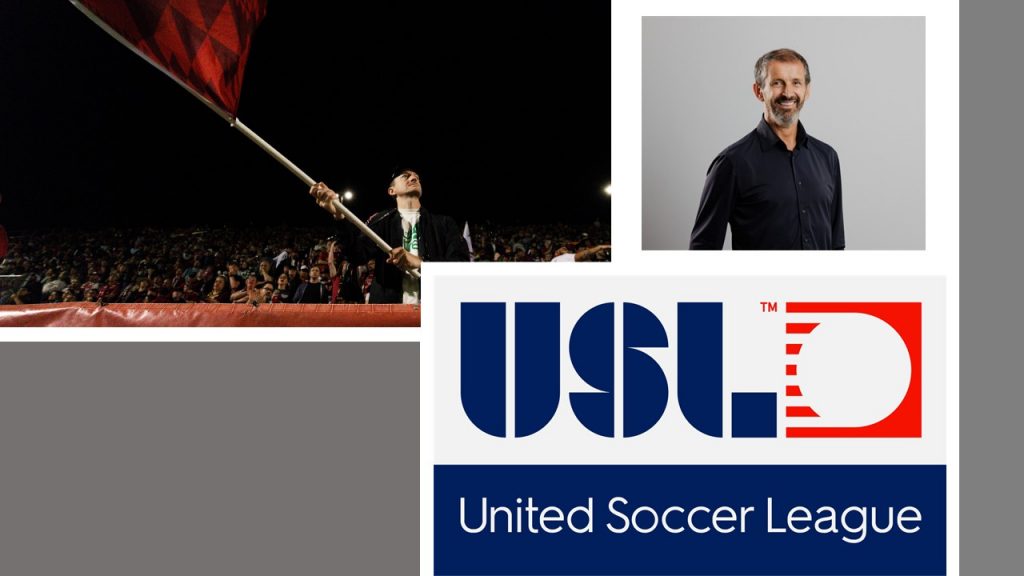
In November, United Soccer League (USL) publicly announced that Tony Scholes – the Premier League’s Chief Football Officer and former long-serving Chief Executive of Stoke City – would become the inaugural President of its new Division One league.
This wasn’t just another administrative hire, it was a clear declaration that the USL’s long-discussed move toward promotion and relegation, the first such system in American professional sports, wasn’t merely aspirational – it was real.
For years the USL has been quietly building towards a more globally recognisable football structure, expanding its footprint into communities large and small and constructing a multi-tiered ecosystem from youth to professional levels. But without true sporting merit at its core and without the opportunity to rise or fall based on results, something fundamental was missing. Scholes’ arrival is designed to change that.
The Vision Behind The Hire
Paul McDonough, President of the USL, leads the strategic design of Division One and the promotion/relegation structure, working closely with Championship President Jeremy Alumbaugh, League One President Lee O’Neill, and the wider USL leadership team. Scholes will join this group to oversee the top tier’s competitive and operational execution.
McDonough knew the league needed a leader with experience operating within one of the world’s most successful football structures – someone who could lead the new Division One league and help guide the organisation as it transitions into a promotion/relegation era.
Scholes’ professional background saw him guide Stoke City through promotion to the Premier League, sustained for a decade, and develop its academy to Category One EPPP status. He navigated the financial pressures that came with being a mid-market club competing against giants of the game like Manchester United and Manchester City, Arsenal and Chelsea, whilst balancing the club’s ambition with sustainability.
After leaving Stoke, Scholes joined the Premier League, where his role expanded to encompass competition standards, youth pathways, integrity regulations and the evolution of technologies such as VAR. These are precisely the systems the USL has been building during the past several years. Scholes’ experience gives him a strong foundation to steward those systems and ensure they operate with integrity and consistency.
And the USL isn’t shy about the scale of the challenge ahead. Introducing promotion and relegation in a country enormous in geography and diverse in market size is an undertaking that requires deep strategic groundwork. The league has spent over two years planning the mechanics.
Now comes the hard part: implementing them. Scholes, in his role as President of Division One, will oversee day-to-day leadership of the league, guiding clubs through new standards and supporting the operational rollout of the system developed by the USL leadership. At the Premier League, football’s global gold standard, Scholes operated in a mature ecosystem. Standards were already set, the infrastructure existed, the fanbase was generational and the competition format had been established for more than a century.
With the USL, he must help build anew. That means managing the growing pains of new clubs – many of them expansion sides still building stadiums, back-office teams, scouting departments and technical staff. Scholes must set standards high enough to elevate the league. Additionally, navigating the geography of the United States will also prove a challenge with travel distances dwarfing anything in Europe. And with more teams added through the pyramid over time, the logistics will only grow more complex.
Building An Authentic Promotion & Relegation System
Promotion and relegation must feel legitimate to the global football audience but must also balance authenticity with American reality. It must make sense financially and culturally in a country built on franchise sports models, that means standards, safeguards and compromise.
McDonough stressed that understanding those challenges are not roadblocks – they are structural realities that must be built into the league’s DNA from the beginning. The USL will operate with three fully professional tiers – Division One, the USL Championship and League One – connected through promotion and relegation.
It’s a simpler structure than England’s, where the Premier League, EFL and National League are managed by separate bodies. In the USL system, all three divisions will exist under the same organisational umbrella, offering consistency and collaboration.
Importantly, clubs cannot be relegated below League One. Still, the USL insists the system must be authentic. “If we did one up and one down in a 20-team league, that’s not promotion and relegation,” McDonough noted. “The league is actively debating models: two up, two down; two automatic plus a playoff like the Bundesliga; or other variations. But the goal remains the same – jeopardy at both ends of the table and meaningful matches every week.”
The Business Case: Why Promotion & Relegation Matters
American sports leagues have avoided promotion and relegation for decades because franchise values depend heavily on guaranteed top-tier status. Introducing merit-based league movement challenges that model. But the USL argues that the system can increase, not decrease, franchise value by making more matches matter.
“When promotion and relegation are on the line there are numerous benefits including increased ticket sales which improves attendance,” explains McDonough. “Inversely that generates greater sponsorship interest and broadcasting value among other benefits.” He also points out that the financial dangers commonly cited like England’s ‘parachute payment’ debate don’t yet apply. “The league does not operate on billiondollar centralised broadcast contracts, so clubs aren’t dependent on massive TV revenue,” he said. “Instead, the major cost increases occur when a club moves to a higher tier such as travel expenses, player salaries, operations and standards.”
To mitigate that, the USL plans initiatives like freezing league fees for newly promoted clubs for two cycles, the gradual implementation of staffing and infrastructure requirements and flexibility on stadium capacity, focusing on matchday environment rather than size.
“A club like the Charleston Battery which is historic and competitive, but situated in a mid-sized market – wouldn’t be required to jump from an 8,000-seat stadium to 15,000 overnight,” stresses McDonough. “As in Europe, sporting achievement should come first, and financial evolution can follow responsibly.”
Building an Environment For Talent Development
Scholes’ background in youth development is particularly relevant. Under his leadership, Stoke City’s academy climbed to EPPP Category One status, competing with the likes of Manchester City and Arsenal. At the Premier League, he oversaw rules and standards for homegrown talent systems nationwide.
While the USL continues to strengthen its pathway, Scholes’ background in youth standards provides important context as the league evolves its football pathway, which remains a broader organisational initiative. For now, the focus is on strengthening the top of the pyramid to ensure there are strong, competitive first teams.
Elevating recruitment standards whilst allowing young players to play meaningful minutes will be central to the plan which will create an environment that attracts and develops talent. In the early years, the USL may serve as a springboard: offering competitive minutes to players aged 17–20, then selling them on to Europe, MLS, or South America.
But over time, the ambition is deeper – to build clubs strong enough to retain talent longer and develop academy systems that feed directly into first teams. Scholes’ experience across both league and club structures makes him uniquely qualified to guide this evolution.
Additionally, addressing national referee and player-pool challenges will require coordinated work across the USL’s technical and operations teams, areas where Scholes’ Premier League experience provides a valuable perspective
The Cultural Opportunity: Growing The Game Across The US
The USL has long focused on markets outside the major league spotlight. Portland, Maine packs 5,000 fans into its modest stadium every match, creating a culture and identity entirely its own. Albuquerque draws 12,000 for New Mexico United, the state’s only major professional sports team.
In cities like Charleston, Richmond and Louisville, the USL isn’t competing with the NFL or Major League Baseball. Promotion and relegation will amplify that passion by attaching real consequence to every season, taking away months of matches that feel like dead rubber and injecting jeopardy, survival, hope, heartbreak and glory which will give it the essence of global football.
The league believes this model will help grow American fandom, not dilute it. A supporter in Portland, Maine can be a Portland Hearts of Pine fan and a Chelsea fan without conflict, meaning local club identity and global fandom can coexist.
But can the USL, with promotion and relegation, surpass Major League Soccer? McDonough answers honestly: “probably not!”. He says MLS ownership groups are among the wealthiest in the world, and their financial power is immense. But he also argues that the closed-league structure inevitably caps certain kinds of growth – particularly among smaller markets.
“The USL doesn’t need to ‘beat’ the MLS,” he says. “It needs to thrive in the places where MLS does not go, and build a globally respected, competitively authentic football system. With Tony’s appointment, with new investment and with the launch of Division One, we’re making a statement of intent. The league is carving out its own identity and its own future.”
Technology, Data And The Game’s Growth
Scholes will also be charged with shaping the USL’s approach to technology. VAR is being evaluated, though stadium infrastructure and referee development remain hurdles. Data collection will also be essential, especially for clubs looking to sell young players abroad. European clubs demand years of detailed physical and performance metrics; and the USL must invest accordingly.
Fundamental to growth of the game is the USL’s relationship with US Soccer, which is growing stronger under the federation’s new leadership. Both sides see the value of a thriving domestic pyramid in improving the national talent pool, and with the FIFA World Cup arriving in the United States in 2026, interest in soccer is set to spike dramatically.
New infrastructure, new fans and unprecedented visibility will create ideal conditions for the USL’s further expansion. Scholes’ arrival strengthens the leadership team that will now execute this vision – alongside Alumbaugh, O’Neill and the league’s partners. He steps into a job no one has attempted before: leading a top-tier US league built on sporting merit and helping ensure the system functions at the highest standards from day one.
For the USL, for American soccer and for every fan longing for a more global football culture, his arrival marks the beginning of a new era. Promotion and relegation are coming to the United States and Tony Scholes will be integral to its success.
Words: Aaron Gourley Images: USL & Getty Images
Taken from fcbusiness Issue 170 – to subscribe, click here