Safer Stadiums: Improving Women’s Experiences At Football Matches
A new research project is inviting women who attend men’s football matches to share their experiences to help make stadiums safer and more inclusive for all.
The ‘Safer Stadiums’ initiative, led by Northumbria University, Loughborough University and the Football Supporters’ Association (FSA), offers an outlet for women to speak out and share their thoughts around aspects such as gender-based violence.
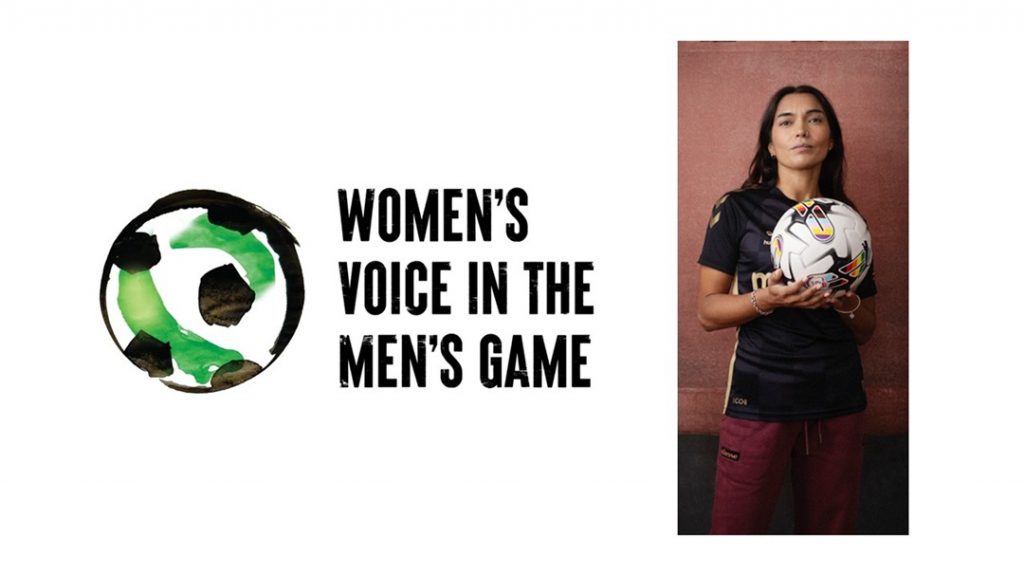
Hannah Kumari, Fans For Diversity Campaign Manager, who leads the FSA’s Women’s Voice in the Men’s Game Network explains more about the project and shares her experiences as a regular match-goer.
What kinds of challenges have women faced when attending men’s football matches?
A combination of practical and behavioural issues have historically presented challenges for women attending men’s football matches. For example, lack of toilet facilities, being searched by male stewards, no sanitary product provision. We’ve seen a marked improvement with these practical things although there’s still work to do at some clubs.
Behaviourally, women have been expected to ‘suck up’ sexism and misogyny as part of the matchday experience or ‘banter’ in the form of sexist chanting, catcalls and inappropriate touching. I think we’ve seen less improvement in this area and that sexism and misogyny are still normalised in men’s football as part of the culture.
You’ve personally experienced sexist or misogynistic behaviour at a match; how did it affect your experience?
It makes me feel unsafe and that I am not accepted as an equal. I often travel to and attend football matches by myself; these experiences have sometimes put me off going for periods of time. I question why I would want to spend my money and time putting myself in those situations, but I always end up going back because I love attending live men’s football matches and have been doing so since I was 12 years old.
Do you feel matchday environments are generally welcoming for women?
I think it’s different at different clubs and depends on the circumstances for individual women. For example, if you are attending with a male partner or friend, it might feel more welcoming, or even if you are in a group of women or mixed. However, being a woman on your own it can feel really intimidating.
Safety and Reporting
Do you think football clubs currently provide enough support for victims who report sexist or abusive behaviour?
No. For the most part when women report sexism, if any action at all is taken, it’s focused on the perpetrators in the form of restorative justice or banning orders. These two things are both really important, but women are often left without the chance to process, explore or express what has happened to them. Having to file online reports, fill in forms and to relive experiences repeatedly can itself be really troubling.
What improvements would you like to see that would make you feel safer inside the stadium or on the way to and from matches?
It’s two-fold, safety measures and education and behavioural change which involves men coming onside as allies. The journey on trains and the perimeters of stadiums can be when sexist behaviour occurs most and often there is not enough police or stewarding presence – these are grey areas with regards to whose responsibility they are. It would be great to see more police presence, officers who are trained in dealing with misogyny, and the same for stewards, but this won’t fix the problem.
We need to find ways of educating men about the real implication of sexist chanting and other behaviours. In addition to online reporting or text numbers, which are a step in the right direction, it would be great to have dedicated female safety officers around the ground that women can go to and talk to if something happens.
Safer Stadiums Initiative
What impact do you think the Safer Stadiums project could have on football culture?
It offers women a safe space to explore, process and express their experiences through movement, including using somatic techniques – body-centered therapeutic approaches such as grounding, breathwork and slow movement – which encourage the release of trauma from the body.
The feedback we had from the three workshops we ran in London, Birmingham and Newcastle included a woman who had been physically assaulted saying that she finally felt some of that stored tension release after a year of reporting which ended up with the man being banned.
Women also said that the movement grounded them and made them feel safe to speak about their experiences. Talking about things is the first step towards change, Safer Stadiums highlights the issues that women are facing and encourages men to come on board as allies. We’re not trying to demonise anyone or ‘sanitise’ football culture, we just want to be treated as equals.
Taking the Safer Stadiums workshops to more regions and clubs, and including male football fans, can have a long-term impact on football culture and promote organic change and a better dialogue between fans.
Why is listening to women’s voices essential for shaping safer football environments and how effective do you think workshops and storytelling are in raising awareness?
It’s impossible to fully comprehend a lived experience which is not your own. We need to hear from, and listen to, women so that men’s football can be a more welcoming space for everyone.
The power of creativity shouldn’t be underestimated in terms of both value for participants and for encouraging empathy in viewers. Emotional connection through storytelling makes it much easier to put oneself in someone else’s shoes as opposed to just being told not to do something because it’s wrong.
Prior to joining the FSA I worked in the arts for 15 years. Football and theatre have a lot more in common with each other than you might think and the football sector needs to consider new and innovative ways to support fans and bring supporters of different backgrounds together.
What positive changes have you noticed in recent years regarding women attending football matches and how valuable do you think the FSA’s Women’s Voice in the Men’s Game Network will be for improving representation and safety?
There are now better toilet facilities and sanitary towel provisions in many stadiums. Additionally, we’re seeing more female pundits and commentators working in the men’s game. We are always stronger as a collective so I hope the Women’s Voice in the Men’s Game Network will be very valuable to have a connected network of women’s supporter groups, working together on issues around safety, visibility and representation.
As with all our work at The FSA, the network is fan-led. The issue that is coming up most from different groups currently is around the ongoing issue of sexist chanting. I’m hoping to plan a dedicated weekend of action later this year, it would be great to get club’s involvement with this.
For further information please contact: hannah.kumari@thefsa.org.uk