Football Gives People A Reason To Arrive. What Makes Them Stay?
What football clubs can learn from hospitality-led leisure design. By Ashley Salmon, Founder and Creative Director, Zero Gravity Design

A supporter can love their club for life and still choose to spend their money in the pub down the road.
That distinction matters. Loyalty to the badge does not automatically translate into loyalty to the spaces around the pitch.
The match gives people a powerful reason to arrive. Whether they arrive earlier, eat at the ground, bring someone with them or stay afterwards depends on a different set of decisions. Many of those decisions are influenced by the environment.
For clubs considering their next refurbishment, that is a useful place to start: what would make someone choose to spend more of their day here?
Design the time around the sport
In hospitality-led leisure, the activity is only part of the visit.
Our work on ECHO and Groove Padel has brought that relationship into focus. The court provides the sporting purpose. The spaces around it need to accommodate everything else: meeting friends, waiting for a session, having a drink afterwards or spending time with someone who is not playing.
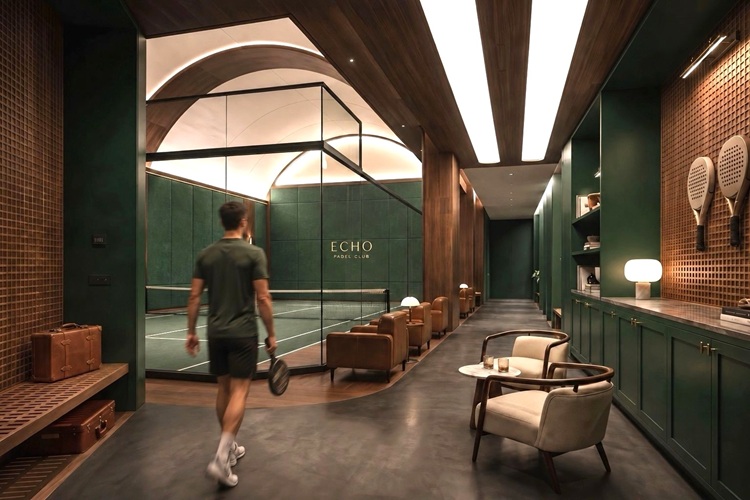
Ekho Padel.jpeg – Courtside seating at ECHO Padel, designed to give people somewhere to stay before and after playing.
Design and concept visualisation: Zero Gravity Design.
Football operates at a different scale, with different security requirements and much sharper peaks in demand. But the human question is familiar: once the immediate activity is over, is there a reason to stay?
A lounge can look impressive in a photograph and still give people very little reason to use it. Uncomfortable seating, harsh lighting, difficult conversation or an unclear food offer can quietly undermine the investment.
The opportunity starts with understanding those moments, then designing around them.
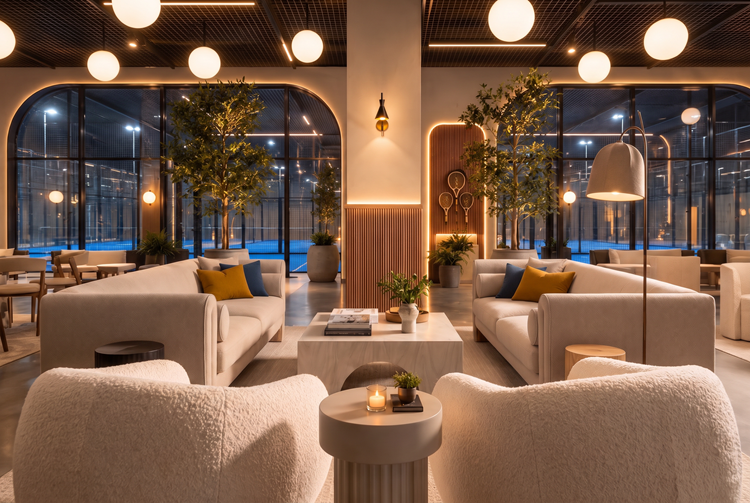
Groove Padel Social Lounge.png – The social lounge concept for Groove Padel, with spaces to meet, relax and watch the courts.
Design and concept visualisation: Zero Gravity Design.
A queue is dwell time nobody wants
“Dwell time” is often treated as an automatic commercial benefit. It is worth distinguishing between time people choose to spend and time they lose.
Ten minutes enjoying a conversation is different from ten minutes trying to get served.
Before investing in a statement bar, examine how it operates. Where do people order and collect? Can staff replenish stock without crossing the queue? Does the furniture obstruct circulation? Can guests understand the offer before reaching the counter?
These decisions connect interior design directly to service. More seats do not necessarily mean a better-performing room. If they restrict movement, slow service or make the space uncomfortable, the apparent capacity gain can work against the experience.
The commercial objective should be a visit people want to extend, supported by an operation capable of serving them.
Give Tuesday its own brief
A hospitality room designed around Saturday’s fixture will not automatically become a compelling Tuesday destination because it is available to hire.
Who is Tuesday’s customer? Why would they choose this venue? What would they pay for?
A local business meeting, community event and private celebration have different needs. Furniture, acoustics, lighting, power, presentation facilities and access all affect whether the room can genuinely serve them.
So does the changeover. Where are spare tables stored? How many staff are needed to reset the space? Can one area open independently without operating the whole building?
Flexibility has to be designed and costed. Otherwise, it becomes a promise passed to the operations team.
Look beyond the hospitality lounge
Useful lessons also come from spaces football might not immediately consider.
At ARNE’s headquarters, our work includes a gym, bringing workplace and fitness environments together. That creates a relevant reference point for clubs considering staff wellbeing, changing facilities and the everyday experience of people working behind the scenes.
Our MediaCity work includes content studios and podcast rooms. For football clubs, those types of spaces could support interviews, sponsor content and storytelling, provided there is a clear production need and operating plan.
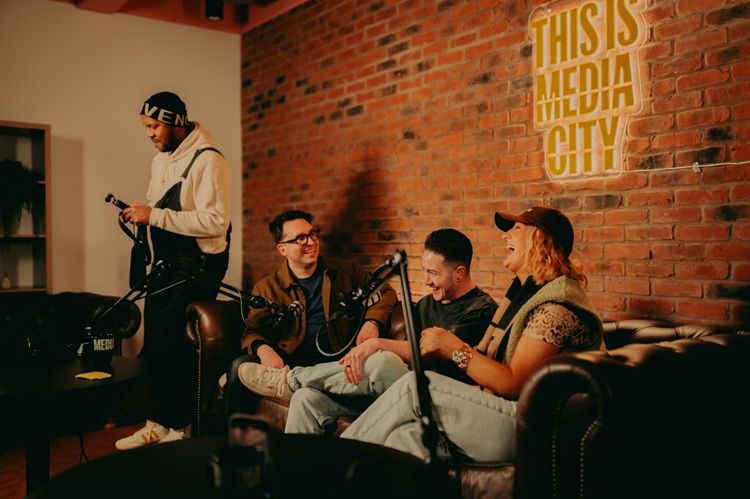
Media City Podcast Studio.jpg – MediaCity’s podcast studio in use.
Interior design: Zero Gravity Design. Photography: Sophia J Carey / MediaCity.
These are cross-sector projects, not football-club case studies. Their value lies in the questions they bring into football: how can one building support more of the organisation’s activities, and which environments deserve greater attention?
Start with one space and a clear purpose
Clubs do not need to begin with a stadium-wide transformation.
One underused lounge, an awkward arrival area or a disconnected bar may provide a manageable starting point. Define the audience, establish the operational constraints and agree what improvement would look like before choosing finishes.
That could mean smoother service, more event enquiries, better utilisation or stronger customer feedback. Measure the baseline, then review what changes.
At ZGD, we are bringing our hospitality, leisure, workplace and retail experience into football through interior design, architecture, furniture and fit-out. The ambition is to create spaces that feel right for the club and work in practice.
Football already has something most venues would love: people who care deeply about being there.
The design opportunity is to make the time around the game worthy of that attachment.
Explore ZGD Sports’ football club design and fit-out services.