Stadium Access In Transition: The Rise Of Identity-Based Verification
As stadiums explore new ways to protect ticket validity for restricted areas, biometric authentication offers a new approach to verifying who is entering. With the Axess SUITE READER 600, Axess brings this technology into its integrated access control solutions.

A valid ticket does not necessarily guarantee that the person presenting it is its rightful holder. This is particularly relevant for season passes and other long-term credentials, which can be shared or resold through unauthorized channels. Biometric authentication adds an extra layer of security by verifying the individual behind the credential, helping prevent misuse and ensuring that access rights remain linked to the authorized holder.

Axess SUITE READER 600 with biometric authentication feature
From Everyday Technology to Stadium Security
Biometric technologies such as facial recognition and fingerprint scanning have moved from science fiction into everyday life. The majority of visitors already use these features to unlock their smartphones, making biometric authentication a familiar and convenient part of their daily routines. This growing familiarity is also shaping the evolution of access control. As digital identity solutions continue to expand, biometric authentication offers new possibilities for making access systems more secure, seamless and user focused.
For stadiums, this means linking access rights directly to individuals rather than relying solely on physical or digital credentials. This is particularly relevant for restricted areas such as VIP suites, media zones and staff entrances, where biometric authentication can help prevent tickets and access passes from being shared, transferred or resold without authorization.
Making Biometric Authentication Work in Practice
Axess addresses this development with the Axess SUITE READER 600, a next-generation ticket such as biometric authentication. When purchasing a ticket, guests receive their access credentials directly in their digital wallet and can subsequently decide whether they wish to use biometric authentication. This approach provides a gradual introduction to technology, allowing visitors to become familiar with facial recognition while retaining the option to use conventional access credentials.
The reader at the access point supports established ticketing methods, including QR codes, NFC and RFID-based tickets. This allows operators to combine conventional ticket validation with biometric authentication according to their specific operational requirements. Designed for seamless integration into the Axess access control ecosystem, the module can be wall-mounted or incorporated as a head unit into the Axess SMART GATE 600, Axess SMART TERMINAL 600 or Axess ARENA POST 600. This enables flexible deployment across both fixed checkpoints and mobile access points.
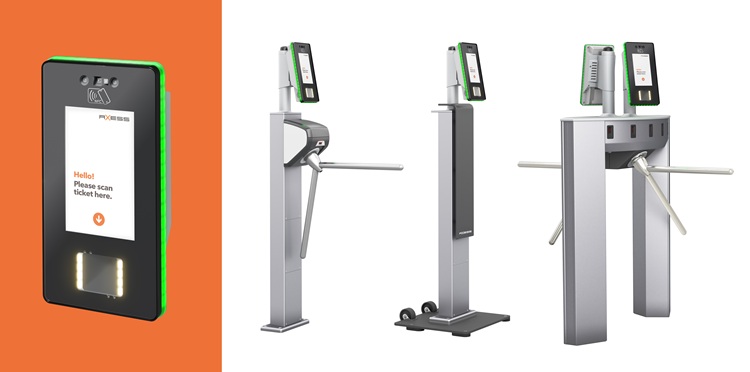
From left to right: Axess SUITE READER 600, Axess SMART GATE 600, Axess ARENA POST 600, Axess SMART TERMINAL 600
Rather than requiring stadiums to overhaul their existing ticketing infrastructure, the Axess SUITE READER 600 provides a practical and flexible way to introduce biometric functionality while maintaining established access processes. Operators can therefore embrace new authentication technologies at their own pace, without compromising existing workflows or visitor convenience.
A Lasting Shift Towards Greater Security
With its potential increasingly being realized, biometric authentication is more than a passing technology trend. It marks a broader shift in access control, moving beyond validating credentials towards verifying the person using them. For stadiums, this creates opportunities to protect restricted areas, strengthen control over access rights and reduce the risk of credential misuse.
The Axess SUITE READER 600 offers a practical way for stadiums to explore biometric authentication, combining this functionality with established ticket-reading technologies and flexible access hardware. As venues continue to develop their digital infrastructure, the focus is shifting from simply validating a ticket to ensuring that access is granted to the right person. Achieving this securely and responsibly will be key to making biometric authentication a trusted part of the next generation of access control.
Images: Axess