Hannover 96 Shaped By The City, Built For The Future
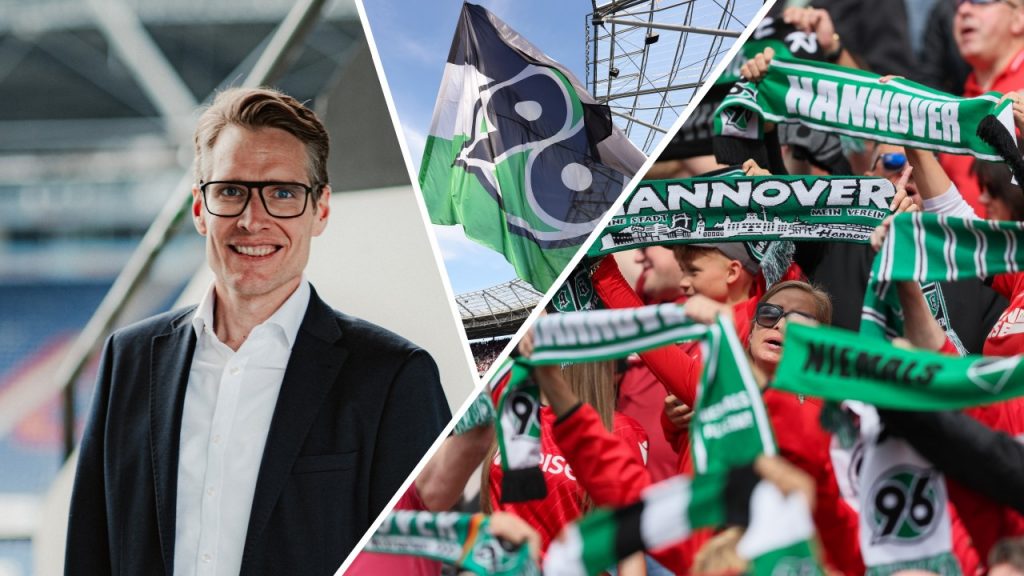
CEO Business, Henning Bindzus explains how one of German football’s most historic clubs is reconnecting with its city, modernising its business operation and building an international platform rooted in authenticity.

From heritage to modern football business
There are clubs whose histories are written only in trophies, and others whose meaning is carried as much by geography, memory and community as by silverware. Hannover 96 belongs firmly in the latter category.
Founded in 1896, the club has grown into one of the defining sporting institutions of Lower Saxony, with a story that runs from early German football through to national championships in 1938 and 1954, a famous DFB-Pokal triumph in 1992 and more recent European nights in the UEFA Europa League.
Yet the modern challenge for Hannover 96 is not only to remember what it has been, but also to define what a club with deep local roots can become in a changing football economy.
From its 49,000-capacity Heinz von Heiden Arena to its growing international links in Japan, Hannover 96 is trying to develop a business model that is commercially ambitious without becoming detached from the people and city that give the club its identity.
For Henning Bindzus, CEO Business at Hannover 96, that balance is central to the club’s next phase. The objective is not growth for its own sake, but growth that strengthens belonging, supporter trust and long-term resilience.
“For us, true alignment means that Hannover is not just our location – it is a living connection between the club, the people and the city,” he says. “Hannover shapes 96, and 96 shapes Hannover.
“Just as importantly,” he adds “our responsibility is to protect what makes Hannover 96 special while creating the structures that allow the club to grow in a modern football environment.”
A club rooted in place
Hannover 96’s history is inseparable from the development of football in the city. Their German championships of 1938 and 1954 remain landmarks in the club’s story, while the 1992 DFB-Pokal victory occupies a special place in German football history because Hannover 96 lifted the trophy as a second-division side.
More recently, the club’s UEFA Europa League campaigns in the early 2010s reminded supporters of the scale and emotion that continental football can bring to the city. But for Bindzus, the club’s history is not a museum piece, it’s a strategic asset that informs the way the club behaves now.
“Tradition is not about looking backwards,” he explains. “It is the knowledge and understanding of our past — but it only becomes meaningful when it guides us forward. For us, tradition provides orientation, not limitation.”
That outlook is increasingly visible in the way Hannover 96 presents itself to the city. The club has placed renewed emphasis on the idea of being “Für Hannover”, while its recent kit positioning around the theme “Shaped by our city” is designed to make the relationship between club and place tangible and its branding has become a statement of operating philosophy.
“Hannover is dynamic, diverse, modern, international and grounded – and we want Hannover 96 to reflect these qualities,” says Bindzus. “They are part of our identity.”
But that relationship, he argues, has to be earned continually, stating: “A club cannot simply claim to represent its city; it has to earn that position every day through behaviour, accessibility and consistency.”
Rebuilding supporter trust
The business of football is often discussed in terms of media rights, sponsorship, ticketing and international growth. At Hannover 96, the foundation is more elemental: the relationship with supporters.
After years in which the club’s sporting path has included relegation from the Bundesliga and the realities of competing in the second tier, strengthening its connection with fans and the city it represents has become one of its most important priorities. Bindzus is clear that the lesson has been simple but demanding. “Supporters want authenticity and reliability,” he says. “They want to feel engaged.”
That approach has led to investment in dialogue formats, forums and more accessible matchday experiences. The aim is to build a relationship in which fans do not feel that engagement is being performed at them, but that they are part of the club’s direction.
The commercial significance of that way is already visible. Hannover 96 has recorded rising attendances, with Bindzus pointing to eight sold-out home matches in 2025/26, an average home attendance above 42,000, marking an increase of over 5,000 fans per game, and more than 20,000 season tickets sold for the following season.
For a second-tier club, those numbers underline the strength of the local market and the opportunity created when emotional relevance, matchday demand and strategic initiatives are aligned.
“The tremendous enthusiasm surrounding our fixtures speaks for itself,” says Bindzus. “Our goal is clear: we want to reach a point where every home match is sold out.”
Commercial growth without losing the club
Across European football, the pressure to grow revenues can pull clubs towards shortterm commercial decisions. Hannover 96’s approach, according to Bindzus, is to ensure that partnerships and business initiatives reinforce rather than dilute identity.
“Commercial growth and tradition are not opposites when guided by the right principles,” he says. “Commercial decisions should strengthen – not dilute – the identity of Hannover 96. A football club is a complex ecosystem. Different stakeholders often have different expectations.
“Our task is not to satisfy every demand, but to create alignment around a shared direction. That requires consistency, clear priorities and sometimes the responsibility to make difficult decisions in the long-term interest of the club.”
That means developing a values-based framework for partnerships, rooted in responsibility to the club, the city and wider Hannover region. In practical terms, it asks whether a partner contributes to the club’s culture, community and long-term positioning, rather than simply adding inventory value.
The Heinz von Heiden Arena is central to that proposition. Opened originally as the Niedersachsenstadion in 1954 and modernised over subsequent decades, the venue carries both heritage and contemporary commercial potential. Its scale gives Hannover 96 a platform for ticketing growth, hospitality, business networking and event-led engagement, while its location and history reinforce the sense that the stadium is more than a matchday asset.
For Hannover 96, business development begins with the home market. “Every partnership should answer a simple question: does it help Hannover 96 become stronger, more relevant and more connected to the people around the club?” says Bindzus.
Data as a business enabler If the emotional side of the club is rooted in belonging, the operational future depends increasingly on insight. Like many football organisations, Hannover 96 is working to improve how it uses data across ticketing, merchandising, sponsorship, content and community activity.
Bindzus describes the club’s Supporter Insight Hub as a central part of that evolution. “We are currently in the process of establishing our Supporter Insight Hub, which will become a central element of how we understand behaviour, expectations and engagement patterns,” he says.
The club is realistic about where it is on that journey. Bindzus acknowledges that Hannover 96 is still at an early stage compared with some of its peers but sees that as a reason for urgency rather than hesitation. The ambition is to make supporter insight part of day-to-day decision-making, not a specialist function that sits away from the commercial operation.
“Step-by-step, supporter insights will increasingly inform ticketing strategies, merchandising concepts, content development and community initiatives,” he explains. “With data-supported forecasting, we will be able to anticipate demand, personalise experiences and allocate resources more efficiently.
“Transformation means moving from isolated functions to interconnected processes. Our goal is to create a business operation that is more agile, scalable and capable of supporting future growth.”
The point is not technology for technology’s sake. Hannover 96’s future operating model depends on combining human judgement with better systems, so that decisions can be made faster, more accurately and with a clearer understanding of supporter needs.
“For us, the future of football business is not about replacing human judgement – it is about amplifying it,” says Bindzus. “The clubs that succeed will be those that combine strategic clarity, cultural understanding and technological innovation into one coherent system.”
Within that system, data becomes another form of listening. “Data gives us the ability to listen at scale,” he adds. “It helps us understand not only what supporters do, but why certain needs, habits and expectations are emerging.”
Japan and authentic internationalisation
While Hannover remains the heart of the club, its commercial future is not confined to Germany. Hannover 96 has been developing stronger links with Japan, a market Bindzus sees as particularly aligned with the club’s values and long-term outlook.
“Japan aligns exceptionally well with our values: professionalism, reliability and long-term partnership thinking,” he says. “There is a strong affinity for German football culture, and the audience is young, digital and internationally oriented.”
The club’s relationship with FC Mito HollyHock provides a sporting and cultural bridge. Cooperation across sporting development, academy exchanges, coaching education and communication initiatives offers a more meaningful form of internationalisation than simply opening a social media channel in a new language.
The pathway of Hayate Matsuda, who moved from Mito into Hannover 96’s firstteam environment, gives the partnership a tangible sporting narrative.
Commercially, the Japan strategy also extends beyond traditional football partnerships. Collaborations with JX Advanced Metals, joint initiatives with the Bundesliga and the club’s partnership with EPOCH, the Japanese trading-card and sticker manufacturer, show how Hannover 96 is looking to build relevance through culture, collectability and lifestyle touchpoints.
“The EPOCH partnership demonstrates that international expansion requires us to look beyond traditional football collaborations,” says Bindzus. “By connecting sport, culture and lifestyle, we reach new audiences and strengthen the international perception.”
For a club outside the biggest global Bundesliga brands, this kind of approach matters. Hannover 96 is not trying to become internationally relevant by pretending to be something it is not. Instead, the club is seeking markets where its values, history and partnership culture can be understood and extended.
“For us, internationalisation is never a single initiative or a reaction to short-term performance,” Bindzus says. “It is a comprehensive, strategic approach that strengthens Hannover 96 as a club – on the pitch and beyond.”
Done authentically, he believes, the benefits can flow both ways, stating: “If internationalisation is authentic, it strengthens the club at home as well. It opens perspectives, creates new relationships and gives our partners a broader platform.”
Football’s globalisation has encouraged many clubs to chase emerging markets, but Hannover 96’s criteria are deliberately measured. The club considers football relevance, economic potential, media reach, partner quality and whether there is a meaningful connection to Hannover.
“Our approach is deliberately long-term,” says Bindzus. “International expansion must be credible, sustainable and aligned with our values.”
That credibility is crucial and for Hannover 96, international growth should not become detached from local responsibility. The club’s home market remains the centre of gravity, while overseas partnerships are designed to add strategic reach, commercial opportunity and brand depth.
“Before entering a market, we build local networks and ensure that we can create real value – not just visibility,” Bindzus adds.
The five-year vision
Asked what success should look like in five years, Bindzus does not frame the answer purely in financial terms. Their ambition, he says, is broader: a club recognised as ambitious, modern, values-driven and connected, with stronger roots in the city and a clearer presence abroad.
“In five years, success means that Hannover 96 is recognised as an ambitious club that moves forward every single day – on and off the pitch,” he says. “A club that combines ambition, innovation and humanity, and uses this identity as a driver for continuous development.”
In practical terms, that means converting supporter enthusiasm into sustainable attendances, improving the matchday and proposition, building a more intelligent CRM and data operation, deepening partnership value and developing international markets without sacrificing local authenticity.
Their task is complex, but Hannover 96, is trying to move from a heritage club to a modern football business without abandoning the emotional impact that makes the club matter. In a football landscape often dominated by scale, capital and short-term attention, that may be one of the club’s greatest competitive advantages.
“Above all, success means that Hannover 96 is known as a modern club: dynamic, values-driven and comprehensively connected,” Bindzus concludes. “We stand for commitment, reliability and the courage to pursue forward-looking and innovative paths.”
The next stage, he says, is about focus as much as growth: “The next stage for Hannover 96 is about clarity: clarity of identity, clarity of ambition and clarity in how we connect sporting, commercial and social development.”
For Hannover 96, the future is therefore not a break from the past, it is about building on the club’s identity in a way that is future-focused, emotionally relevant and internationally credible. The city remains the starting point and the business objective is to ensure it also becomes the platform for what comes next.
Images: Hannover 96 & Getty Images