Comment: How To Become A Director of Football
Not everyone who plays grassroots football is going to make it as a professional player. Even those who secure Academy contracts or break into the reserves or the first team can find themselves not making it at professional level.

Many of them drift out of the game, but with football becoming increasingly big business, there are plenty of opportunities for individuals to carve out a career in the game off the field.
Ricky Martin is one such example. He was an associate schoolboy for Norwich City and played grassroots football for Histon in the Eastern Counties League before getting his break as an Academy coach at a young age at Cambridge United.
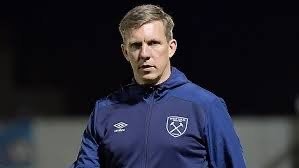
Photo courtesy of Ricky Martin
He explained: “I was a part-time coach at the club, and I was running soccer schools, so I was like recruiting players for them. When Paul Ashworth was leaving, they interviewed a couple of candidates, but the salary package was so low that they couldn’t really attract anyone full-time.
“Paul said to the club that I might not seem ready now, but I’d be good for them and that I was someone that’s going to have a career in the game. I went and met Tommy Taylor, the manager at the time, and they offered me the job.
“At 20, I just knew that I had to get into the game. It was a very different landscape back then that wouldn’t happen now. There’s far more structure to sports recruitment and you require a lot of qualifications, which at the time I didn’t have.
“I understand it, but the downside is that sometimes clubs don’t sometimes take a chance on someone that is up and coming because they need to tick qualifications boxes. You’d now need a lot more experience to oversee a whole youth programme at the age of 20.
“I was leading the whole Academy programme for kids aged nine to 18 and some of the players were only two years younger than me. I had five unbelievable years, and I wouldn’t be where I am today if it wasn’t for that opportunity.”
Martin was identifying young talent across East Anglia and securing players who might have gone to Norwich. The Canaries then came calling, appointing him as Assistant Academy Director and then Academy Director.
The Canaries are a team renowned for developing young talent and Martin’s impact was integral to that success. He was involved in the development of players such as Jacob Murphy, now an integral part of the first-team at Newcastle United, Ben Godfrey who enjoyed a fine spell at Everton before moving to Atalanta in Serie A, and James Maddison, who was plucked from Coventry City and developed before getting moves to Leicester City and Tottenham Hotspur.
Norwich also won the FA Youth Cup, beating Chelsea in the middle of a dominant spell where the west London side won the trophy seven times in nine years. The Canaries also secured Category One status for their Academy, the highest rating in the English youth system.
But football moves forward and so do careers, with Martin keen to take on more responsibility. He explained: “I needed something different, and I felt going into a first-team environment was my next step. I needed a new challenge.”
Martin pitched his vision of becoming a Technical Director to the Norwich board, which he secured just as the club was relegated to the Championship at the end of the 2013-14 season.
“The role of the Technical Director was new and is still evolving today. I was there to oversee all the departments. So medical sports, science, operations, recruitment and first team logistics.
“Alongside the manager and the Chief Executive, we formed a management triangle, working side by side. Some clubs put the technical director above the manager, but we wanted a more collaborative approach.
“I assisted the manager to ensure that everything off the pitch was taken care of. The heads of departments would all report to me, and we ensured that we had the right staff in place developing a philosophy of trying to create a best-in-class environment.”
With varying needs and timelines, juggling each of the departments required delicate management skills to ensure that everything ran smoothly, Martin saw the Canaries get promoted in the Championship play-off final against Middlesbrough before leaving in 2017.
He became a football consultant, advising clubs around the world on various aspects of football administration and youth development.
Within two years, he was back in the Premier League, having been appointed by West Ham, a club renowned for its youth development, as Academy manager.
“When a club like West Ham came calling and gave me an opportunity to lead up their Academy system, it was very exciting and with their tradition and their heritage, it was a great opportunity.
“We managed to get 17 debuts in the first team and saw some young players really kick on and develop their careers. We worked with some great staff as well, with great youth developers.”
After three and a half years in east London, Martin was offered the chance to become Technical Director again at Stoke City, who had been relegated from the topflight and looking to put a strategy in place to help them push for promotion.
“When you go into a club, it’s new and there’s always challenges. Stoke certainly had some challenges and I saw the opportunity to make my mark and put a foundation in place so that the club could move forward again.
“In my first summer we made 18 new signings, so it was a very busy window. When you’ve got a lot of players coming in, it’s very hard for all of them to hit the ground running, so they needed some time and now some of them are really developing.”
Martin left Stoke earlier this year and is now biding his time before making his next move.
“I’m a developer of people and so developing young people in an academy is somewhere that I feel comfortable. I really enjoy seeing young players develop, but also young practitioners and coaches and medical and sports science staff. My next role won’t necessarily be as a technical director or sporting director. It could be back in the academy field and developing young people, departments and systems that need to be put in place to optimise the potential of the club and its academy programme.
“In England, I feel we now have one of the best youth development programmes in the world. The facilities and the infrastructure and everything that goes behind running a successful football club are producing some outstanding talent, not just players but some outstanding youth developers and practitioners.
“I’ve seen so many changes, such as a lot more emphasis around player care and well-being. There’s also work around diversity, and I’ve been lucky to be involved with the Premier League on some action groups to help to increase diversity in the workforce.
“It’s valuable because clubs need to reflect the diversity of the players and the fans and that’s been an imbalance. It’s really empowering to have such a pivotal role in inspiring our young people and our young players.”
With the game growing for men and women from grassroots to elite level, Martin believes football is a great career for those passionate about working in elite sport.
He added: “There’s some great opportunities for support staff at the academies and first teams have also really grown. From data to nutrition, sports science, recruitment operations, logistics and law, there’s so many now skill sets that are required to have an effective football club.
“Any young person that wanted to get into the game and we’re just talking here about the men’s game. But you’ve also seen the growth of the women’s game that’s and how their academies are growing now and the great work the WSL is undertaking so I can only see that space getting bigger.
“Whether you go straight in on a work placement and look to develop your career that way or go to university and get your degree and the qualifications required to come into a football club, it’s all about people working really hard and maximising their potential.”
Martin also sees the evolving world of football as a good thing and an opportunity to learn from different viewpoints.
He added: “The Academy director role and the sporting director roles are constantly evolving. I can see them getting bigger because of the expansion of the different departments and because of how much more diverse the game is becoming. In five years’ time, I think some of the bigger clubs will have an assistant sporting director with a different skill set to complement their colleague.
“You’ve already started to see that already in the Premier League with how big the game is becoming. Football is a worldwide game so the more we can open up and the more we can learn from different cultures and different environments around the world is going to be really powerful.
“Sharing of knowledge is important. Obviously, the Premier League is a really strong brand at the moment and a lot of people want to come to England to work here. But I also see some great opportunities all around the world where leagues and clubs are doing some unbelievable work. I see some interesting opportunities going forward.”