Football Association of Wales – The Dragon’s Crucial Next Steps
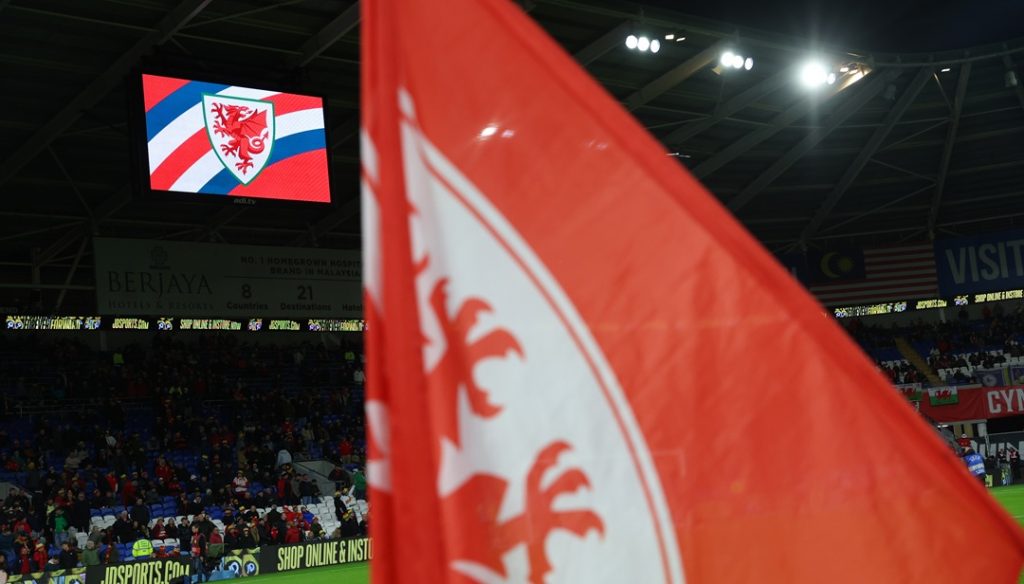
The Football Association of Wales celebrated its 150th anniversary in February. But the most important period of its existence comes in the next 150 weeks.

The iconic moments in world football often start in a pub. Whether that be the creation of the rules of the modern game in London’s Freemasons Tavern, or the forming of AC Milan in a back room of the Hotel du Nord in the Italian city.
And so it was, in Wrexham’s Wynnstay Arms Hotel, that the founding fathers of the Football Association of Wales (FAW) gathered on 2nd February 1876 to create a new body to represent the nation on a growing world stage.
150 years on, a celebration was held in Wrexham recently, which itself is becoming a byword for Welsh sporting success thanks to the ownership of the city’s club by Rob McElhenney and Ryan Reynolds.
A lot has changed since that meeting in the Wynnstay. Wales has exported legends of the sport around the world. From John Charles to Jess Fishlock, you are never far away from someone who recognises this small country by its big football stars. Despite that, football has always lived in the shadow of rugby there.
That is now changing, and the Football Association of Wales now finds itself in the most important 150 weeks of opportunity in its 150-year history, as it seeks to secure its upward trajectory for its national teams whilst trying to rejuvenate under-supported and poorly developed domestic leagues.
Football is now pushing at an open door in the hearts and minds of the Welsh people. A heart-breaking decline in the state of Welsh rugby has played its part in the love of this proud sporting nation increasingly turning to the round ball game. But nothing should be taken away from the efforts of those at the FAW over the past decade in making Wales fall in love with football again.
On the pitch, the Welsh dragon is on fire in the men and women’s senior teams. From the men’s Euro 2016 tournament qualification to the women making their debut in the last Euros, a Red Wall of supporters have spread the positivity of Brand Cymru far and wide – fuelled by commercially-appealing Welsh sporting heroes.
This has been heavily supported by a reformed Football Association of Wales, which has created two elite training centres in Dragon Park, Newport and Colliers Park near Wrexham. It invests in 3G pitches, which allows domestic football teams to navigate their fixture schedule away from weather-related postponements, and opens new revenue streams for clubs by allowing them to rent it out to their community for daytime or non-matchday use.
And the FAW has developed a world-renowned coaching course, which has attracted elite players like Thierry Henry, Mikel Arteta, Yaya Toure and many more. Staying on the subject of elite football, the FAW has brought a number of major competitions to the country. Whether that be the Champions League Final or the UEFA Under 19s tournament.
But Wales’s place in world football has no guarantees, despite these achievements. As one of the four home nations, it has a space at the top table of the sport’s law-making body, IFAB – something not afforded to bigger and more successful nations. And that honour is frequently questioned – especially by African nations – at FIFA gatherings.
How come it’s Britain that competes at the Olympics, but Wales is a separate nation when it comes to football?
“We have survived 150 years as an always a worry that our status could come under threat,” says David Collins, who publishes the Welsh Football magazine – the sport’s bible in Wales for 35 years.
However, it is ironic that the part of the game which is key to securing Wales’s independent football nation status gets the least attention and investment – and this is borne out in the decline in UEFA coefficients for Welsh domestic sides.
The national men’s pyramid is in peril. Since its inception in 1992, Wales has slowly dropped towards the bottom of the club rankings for European competition, with only ever-present title holders The New Saints stopping that plummet further. Attendances for games have been sporadic – with some increases for big derbies possibly countering that.
And Welsh domestic armchair fans look over the Irish Sea in envy as domestic leagues in Northern Ireland and the Republic garner far more local media column inches and TV minutes than the Welsh game gets. In fact, it is an in-joke amongst Cymru Leagues football fans that the local Wales Online website only covers their sport if someone has scored a worldie or there has been a punch-up on the pitch.
And this is the biggest challenge that faces Welsh football in the next three years if it is to kick on as the force its top-table presence requests. The national league needs to be supported by its nation, its media and the body that runs it.
“We need sustained investment in clubs and facilities, smarter commercial growth of our leagues and stronger partnerships that increase revenue, visibility and opportunity so the whole game can thrive together,” says Luke Davies, Chairman of Valleys-based Cambrian United, which has ambitions to represent The Rhondda in Europe in both the men and women’s game.
A strategy to improve the domestic leagues has been initiated by the FAW, but it is not moving fast enough for clubs and fans, as Haverfordwest Chairman, Rob Edwards tells us.
“Over 150 weeks ago, clubs met to discuss a much-needed strategic review to be able to develop the Cymru Leagues on and off the pitch,” he explained. “I raised issues at the beginning of the strategic review process that a five-year plan is an excellent start, but countries previously lower in the coefficients have already moved ahead to full-time football, bigger commercial deals for the league and investment into facilities.
“Therefore, a five-year plan from that point would, in reality, need to be a 10-year plan achievable in five years to realistically keep up with those countries at the lower end of UEFA rankings.”
“Too much time was wasted over the years wooing the ‘Anglo’ clubs like Merthyr into the Welsh league system, and we are now playing catch up relative to other countries,” says Collins from Welsh Football Magazine, pointing out the historical overhang the league has always had to overcome. Indeed, if Welsh football’s history had a Facebook status, it would be “it’s complicated”.
Whilst the Welsh FA Cup is one of the oldest trophies in the world and Welsh leagues have existed for more than a century, the bigger club teams always played in the English pyramid. Early attempts to link the leagues allowing Welsh domestic leagues to feed into the English system were rebuffed by The Football Association, meaning a two-tier system for club sides was born – and exists to this day.
When African nations ramped up the pressure for one British FA in the early 1990s, Wales had to form a national football league to keep them at bay. In the process it had to exile Welsh non-league clubs playing in the English system, with a bitter court battle which only benefitted lawyers and broke the heart of Welsh domestic football. This was always going to hold back the birth of a national domestic pyramid.
For many club football fans in Wales, their national league always plays second fiddle to the teams they watch in the English Football League. However, many of those Welsh EFL clubs (and others in England) have signed Cymru Leagues talent, managers and back-room staff. So, there is clearly something to be said about the potential of this ‘unfashionable’ system.
The topflight of the Welsh domestic men’s system, the Cymru Premier League, is being expanded to 16 teams next season with the FAW believing this will reduce the monotony and predictability of the current 12 team league.
However, no more details exist yet on how the FAW will expand commercial revenues and get a better TV deal to increase the exposure of the league in the UK and beyond.
“My hope for the next 150 weeks is that the plans for the league are accelerated, investment into the league has reached maturity creating a more marketable project with additional income streams provided to clubs to support growth, and more clubs are moving towards full-time football,” says Haverfordwest’s Edwards.
For sure, other big challenges face the FAW in these next three years. The Welsh men’s team needs to be a consistent qualifier in major tournaments, and they need to be joined by a developing women’s team. But if the dragon is to stride forward it needs to fix its Achilles heel of a national league soon.
Words: Marc Webber
Image: Huw Fairclough/Getty Images